
Parking, Pathways, and Lighting: The Wedding Guest Experience Couples Often Miss
Couples often notice the ceremony backdrop first. Guests usually notice something more practical: the turn from the road, the parking area, and whether they can tell where to go next.
Parking, pathways, and lighting rarely lead a venue's photo gallery, but they shape the first and last minutes of the celebration. When those details work, guests arrive calmly and leave confidently. When they do not, even a beautiful venue can feel confusing.
These are the details worth checking before you book.
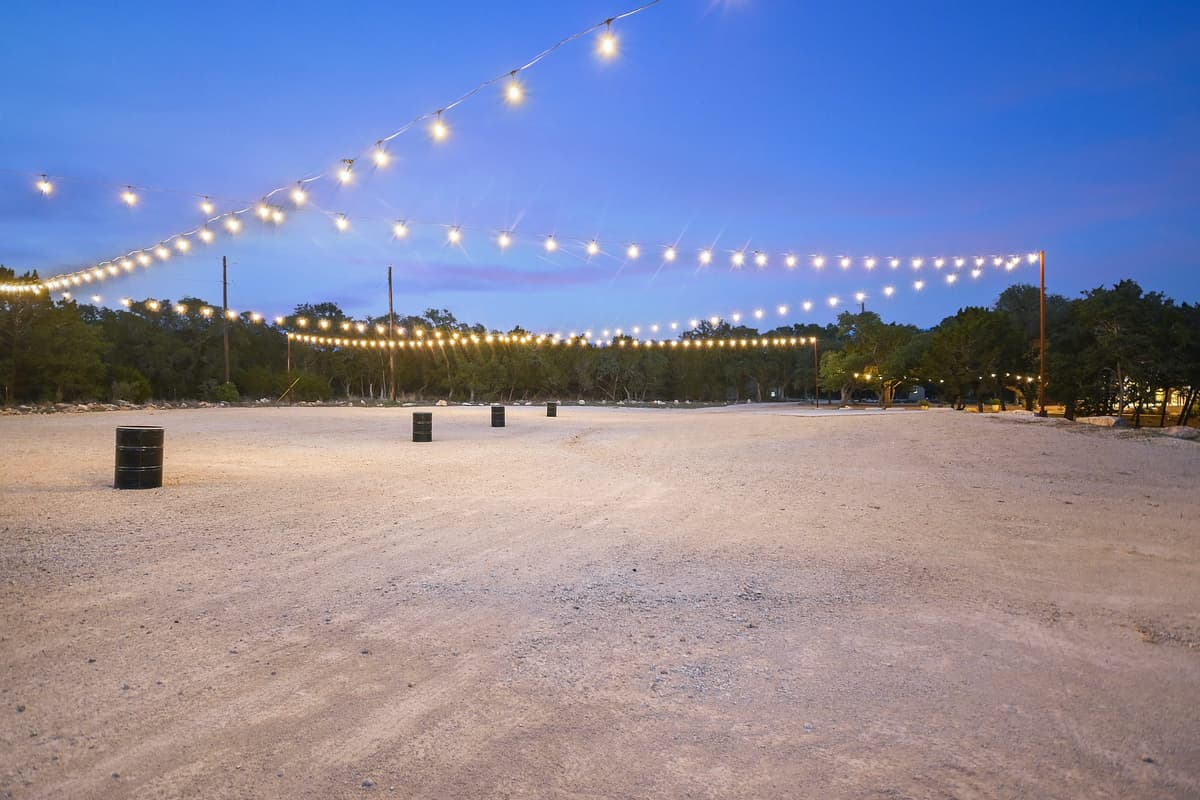
Start with the real parking capacity
“On-site parking” is only the beginning of the answer. Ask how many cars the lot accommodates, whether the count assumes attendants or stacked vehicles, and whether vendor vehicles use the same area.
Prima Vista includes free on-site parking for up to 100 cars and hosts one event per day. That means wedding guests are not competing with a second event for the same spaces. Your expected car count will still depend on household size, hotel shuttles, rideshare use, and the number of vendor vehicles.
A practical estimate should include:
- Guest vehicles
- Wedding-party and family vehicles
- Catering, photo, video, floral, DJ, and rental vehicles
- A buffer for guests who do not carpool as expected
- Space for a shuttle or rideshare pickup, if planned
Ask where vendors unload and where their vehicles remain after setup. A delivery van parked in the wrong place can block a guest route or reduce usable capacity.
Look at the surface, not only the number of spaces
Gravel, grass, concrete, and asphalt behave differently in rain and after dark. During a tour, look for ruts, loose stone, puddling, slopes, wheel stops, and transitions between surfaces.
Guests in formal shoes, older adults, and people using mobility aids may experience the same route very differently. Marked accessible spaces should connect to a practical guest route, not merely exist somewhere in the lot.
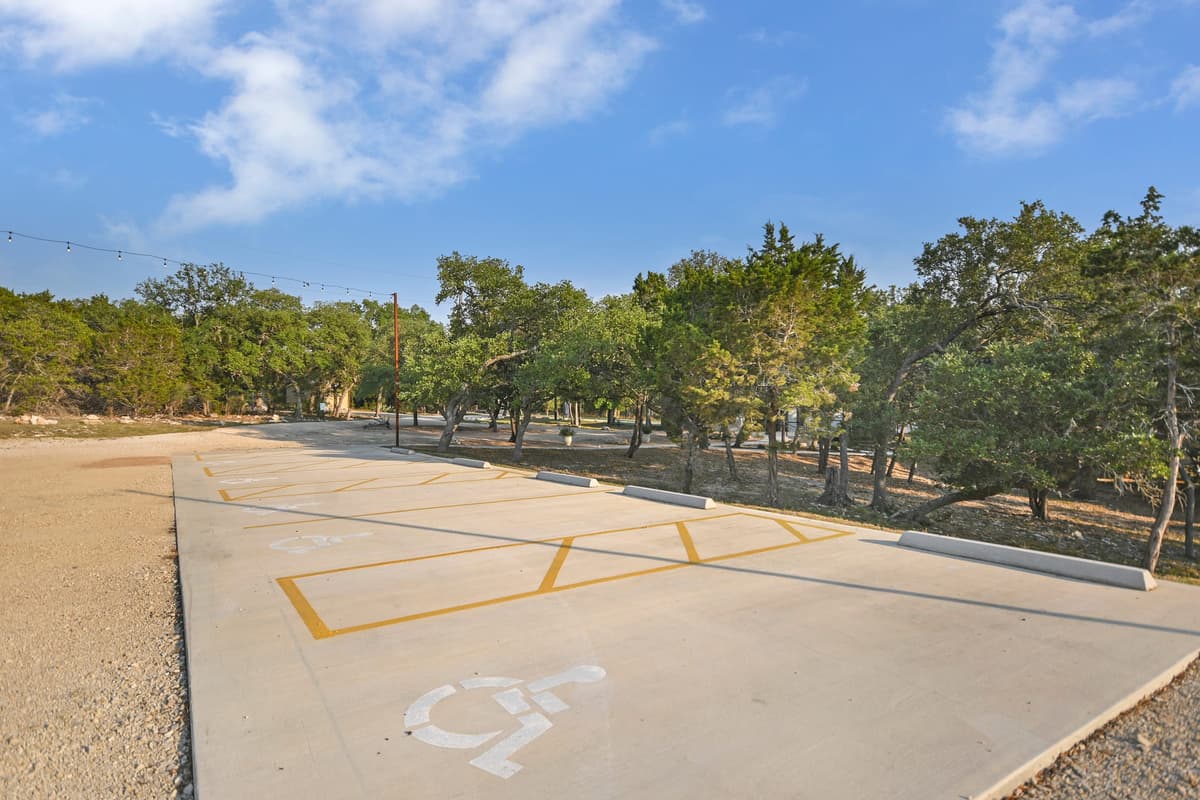
At Prima Vista, marked accessible spaces are set on a concrete pad. Ask the team to show you the route from those spaces to the event areas so you can plan seating, assistance, and arrival timing around the needs of your actual guest list.
Identify the drop-off point
A close drop-off option matters for guests who cannot comfortably walk the full route, parents managing small children, and anyone arriving during heat or rain. Ask whether a car can pause without blocking traffic and whether the route from drop-off to the entrance is covered, paved, or stepped.
At Prima Vista, a driver can pull up directly to the main entrance to drop off a guest before continuing to the on-site parking area. No advance arrangement is required.
Walk every pathway guests will use
Follow the day in order: parking to ceremony, ceremony to cocktail hour, cocktail hour to dinner, reception to restrooms, and reception back to parking. Do this at a normal guest pace instead of taking the shortest staff route.
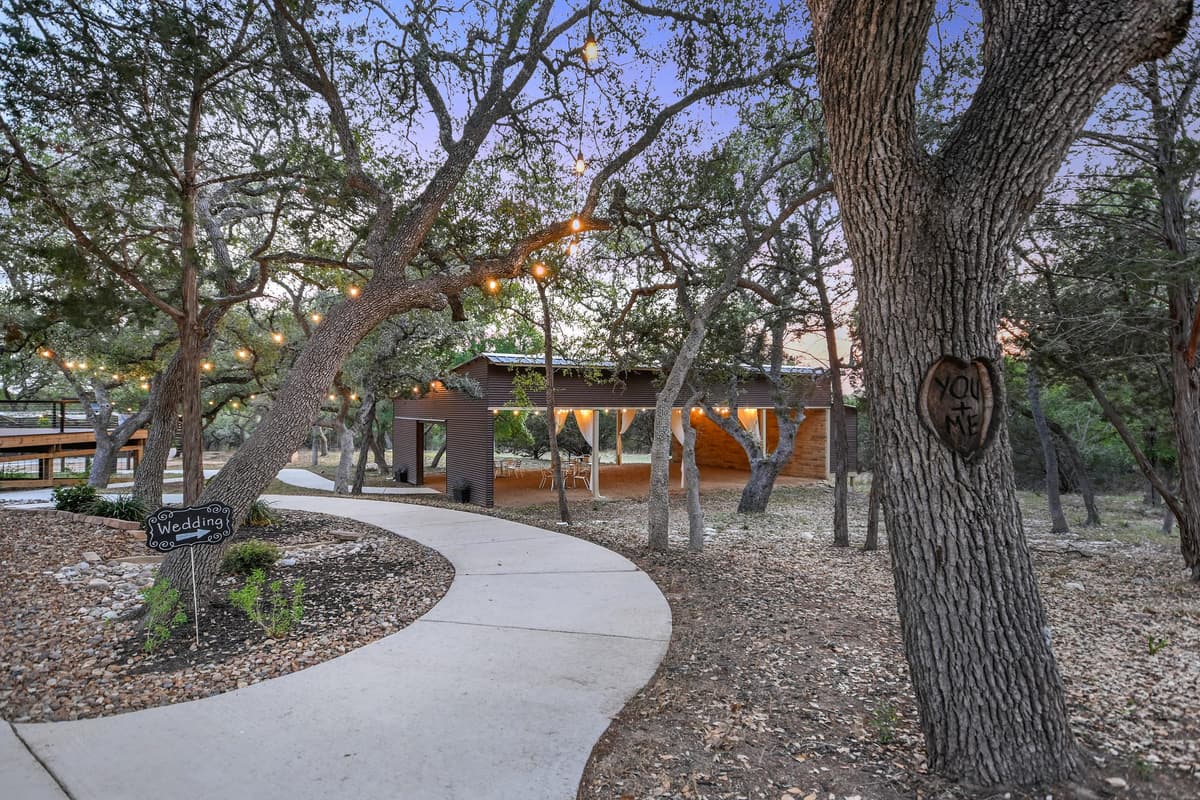
As you walk, note:
- Surface and width
- Slopes, curbs, thresholds, and steps
- Handrails or ramps where needed
- Shade and resting points
- Bottlenecks near doors, bars, and seating charts
- Places where décor or cords could narrow the route
- How the route changes if it rains
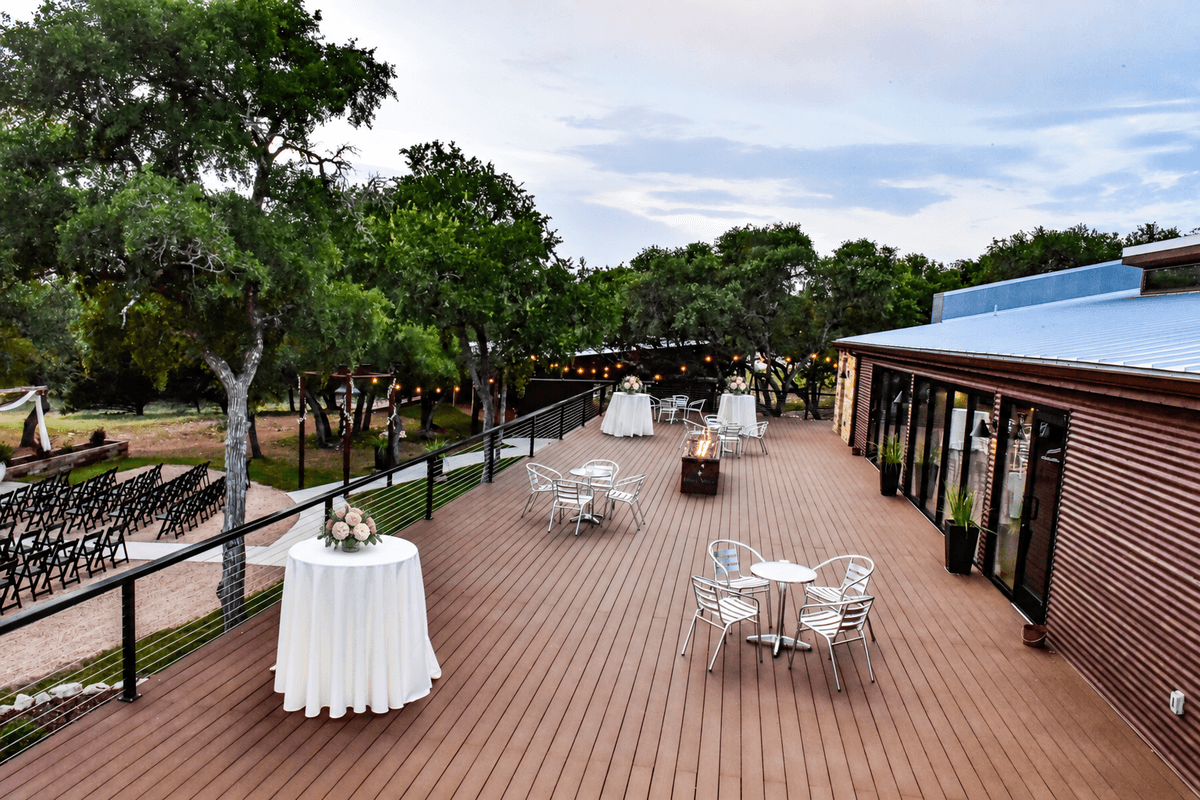
Prima Vista's paved walkways connect its main guest areas through the oak-covered property. The reception hall, primary ceremony spaces, pavilion, and deck or patio areas are ADA accessible. Natural portrait areas elsewhere on the ten-acre property may have uneven ground, so distinguish the event route from optional scenic terrain.
See the venue after sunset if you can
A three-o'clock tour cannot fully answer a ten-o'clock departure question. Ask to see current evening photographs and, if possible, visit near sunset. Look for even light at entrances, turns, ramps, surface changes, and the path back to the parking area.
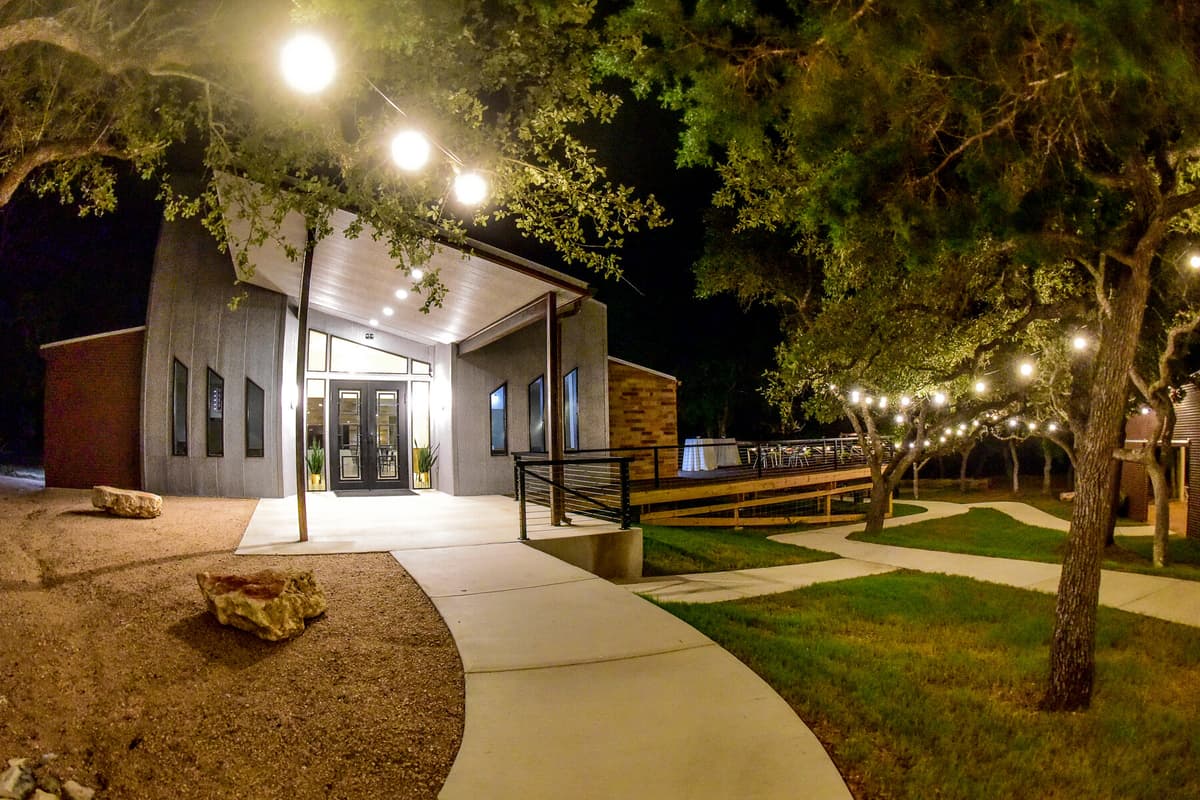
Decorative string lights create atmosphere, but guests still need to see where they are going. Very bright pools of light beside dark gaps can be difficult for people whose eyes adjust slowly. Glare can be just as unhelpful as dimness. The goal is a clear, consistently lit path, not maximum brightness everywhere.
If candles or low lighting are part of the reception design, protect essential circulation. Keep steps, exits, restrooms, and floor-level obstacles visible throughout the event.

Prima Vista · Wimberley, TX
See how your date, guest count, and package choices shape your estimate.
Estimate My EventPlan the return trip before the party begins
Departure has its own logistics. Guests may leave in waves, carrying favors or helping children. Drivers may be unfamiliar with Hill Country roads, and rideshare availability can vary by time and location.
Decide in advance:
- Where rideshare vehicles and shuttles will wait
- Who can help a guest reach their car
- Whether parking or pathway lights remain on through vendor departure
- How stranded guests will contact the coordinator
- When the final shuttle leaves
- Whether a sober-ride plan is needed
Put transportation details on the wedding website and repeat them in a final guest email. Important departure information should not live only on a sign someone sees after the reception.
Consider weather, sound, and sensory comfort
The route may be physically accessible and still feel difficult. In Central Texas, heat, sudden rain, darkness, and loud reception audio can change the experience.
Ask where guests can wait in climate-controlled space, whether the ceremony has a covered weather option, and how quickly everyone can move indoors. Leave a quieter route or seating area for guests who find amplified sound overwhelming. Make sure staff instructions do not depend entirely on shouted announcements or small printed signs.
A five-minute guest-journey test
Before signing a contract, or during the final walkthrough, try this simple test:
- Start where a first-time guest turns into the property.
- Park in the farthest likely guest space.
- Walk to the ceremony using only the signs that will be present.
- Continue to cocktail hour, reception, and restrooms.
- Return to the parking area after dark.
Bring someone who was not part of the planning. If they hesitate, take a wrong turn, or cannot identify the entrance, treat that moment as useful information. A small change in signage, lighting, staffing, or instructions may solve it.
How Prima Vista answers these questions
How many guest cars can park on-site at no additional charge?
Prima Vista provides free on-site parking for up to 100 cars. Because the venue hosts one event per day, the parking area is not shared with another wedding.
How many marked accessible spaces are provided?
There are five paved, marked accessible parking spaces.
Where can a driver drop off a guest close to the entrance?
A driver can pull up directly to the main venue entrance, drop off the guest, and then continue to the on-site parking area. No advance coordination is needed.
What surfaces connect the parking area to the ceremony and reception?
The general parking area has a compacted gravel surface. The accessible spaces are paved, and smooth concrete walkways connect the main guest areas, including the ceremony setting, covered pavilion, deck or patio, and reception hall. Optional portrait locations elsewhere on the natural ten-acre property may have uneven terrain.
Are the primary event areas accessible without stairs?
Yes. The reception hall, primary ceremony site, covered pavilion, and deck or patio areas are ADA accessible. Ramps and paved routes allow guests to move among the main event spaces without using stairs.
What lighting remains on through the final departure?
The on-site parking area, exterior entrance, and principal outdoor routes are illuminated for evening use. Prima Vista also has programmable Govee accent lighting that can be adjusted to complement the wedding's color palette and theme while the permanent lighting keeps the main guest routes visible.
Who handles parking questions or assistance on the wedding day?
The Prima Vista venue team provides day-of support and coordinates with vendors. Couples should identify any guest who has requested arrival assistance before the wedding so the team can include that need in the event plan. A dedicated personal attendant or sighted guide should also be assigned when a guest requests one.
Is there a covered or indoor route during rain?
The route from the on-site parking area is outdoors, so it is not completely covered. A driver can drop guests directly at the main entrance during rain. The ceremony itself has two weather-ready alternatives: the solid-roof pavilion or an indoor ceremony near the fireplace.
Where do vendors load, unload, and park?
Vendors load and unload through the rear door, which leads directly into the kitchen area. This gives catering teams a practical route that does not cross the main guest entrance. Vendor vehicles park on-site, and all drop-offs and pickups must occur within the couple's 12-hour rental window.
Can we walk the guest route at dusk?
Yes. Request a tour time near dusk when scheduling permits. If an evening appointment is not available, walk the full route in daylight and ask to see current photographs of the parking area, entrance, and pathways after dark.
Want to test the entire guest journey for yourself? Book a private tour of Prima Vista and ask us to show you the parking, accessible spaces, paved pathways, evening lighting, ceremony areas, and reception route.