
Planning a Wedding That Welcomes Blind and Low-Vision Guests
Making a wedding more accessible is not about checking one box. It is about helping every guest know where to go, what is happening, and who can help if they need it.
For a blind or low-vision guest, thoughtful planning can begin before the invitation arrives and continue through the final trip back to the parking area. The best first step is also the simplest: ask the guest what would make the day easier for them. People have different levels of vision, different travel skills, and different preferences. A guest may want a sighted guide, a detailed text description, a seat near the ceremony audio, or no assistance at all.
Think of this guide as a starting point. A quick, respectful conversation with your guest will always be more useful than guessing what they need.
Make the invitation and wedding website easy to use
Important information should not exist only inside an image. A beautifully designed invitation can still be accompanied by clear digital text containing the date, time, address, dress code, RSVP instructions, and transportation details.
For the wedding website:
- Use real headings in a logical order.
- Keep text contrast strong and type large enough to resize comfortably.
- Add useful alternative text to meaningful photographs.
- Label links clearly instead of writing “click here.”
- Avoid putting essential instructions in a graphic, PDF, or scrolling carousel alone.
- Provide a phone number or email address for accessibility questions.
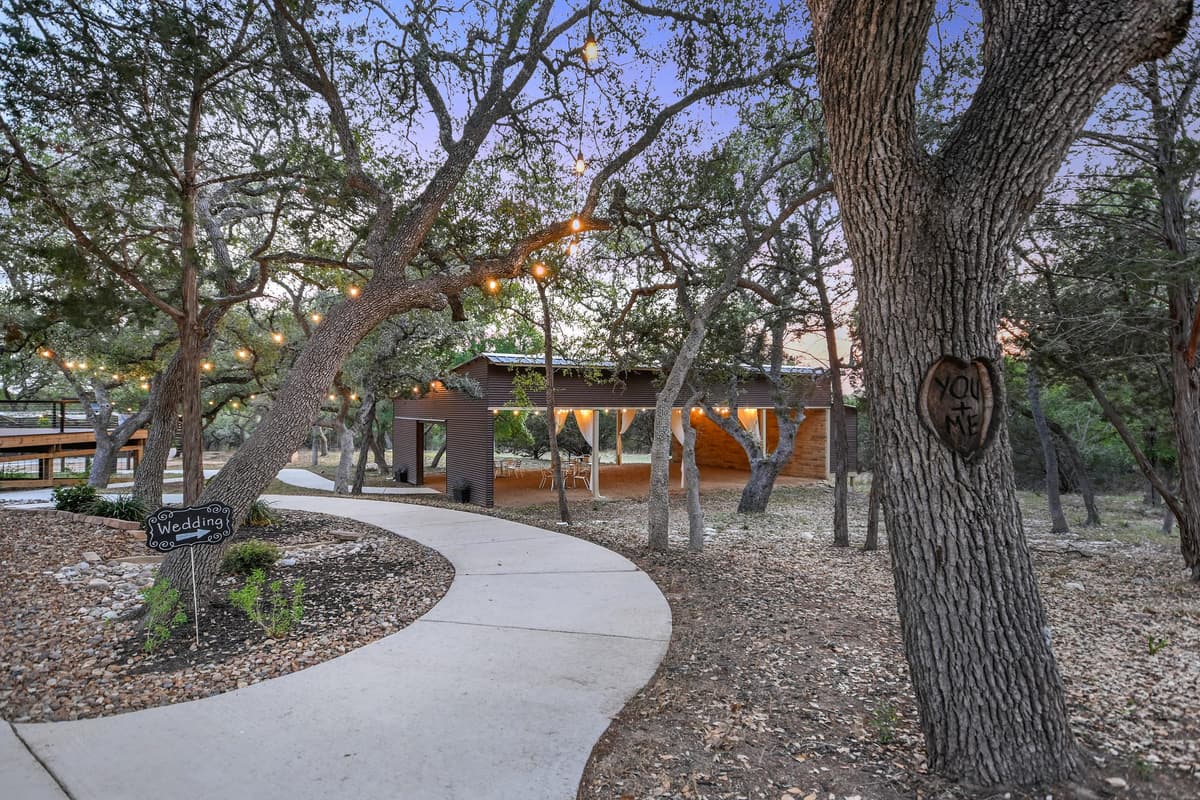
If the day includes several locations, describe the order in plain language. “The ceremony and reception are on the same property; guests will follow a paved outdoor path from the pavilion to the reception hall” is more useful than a decorative map by itself.
Describe the arrival before the wedding day
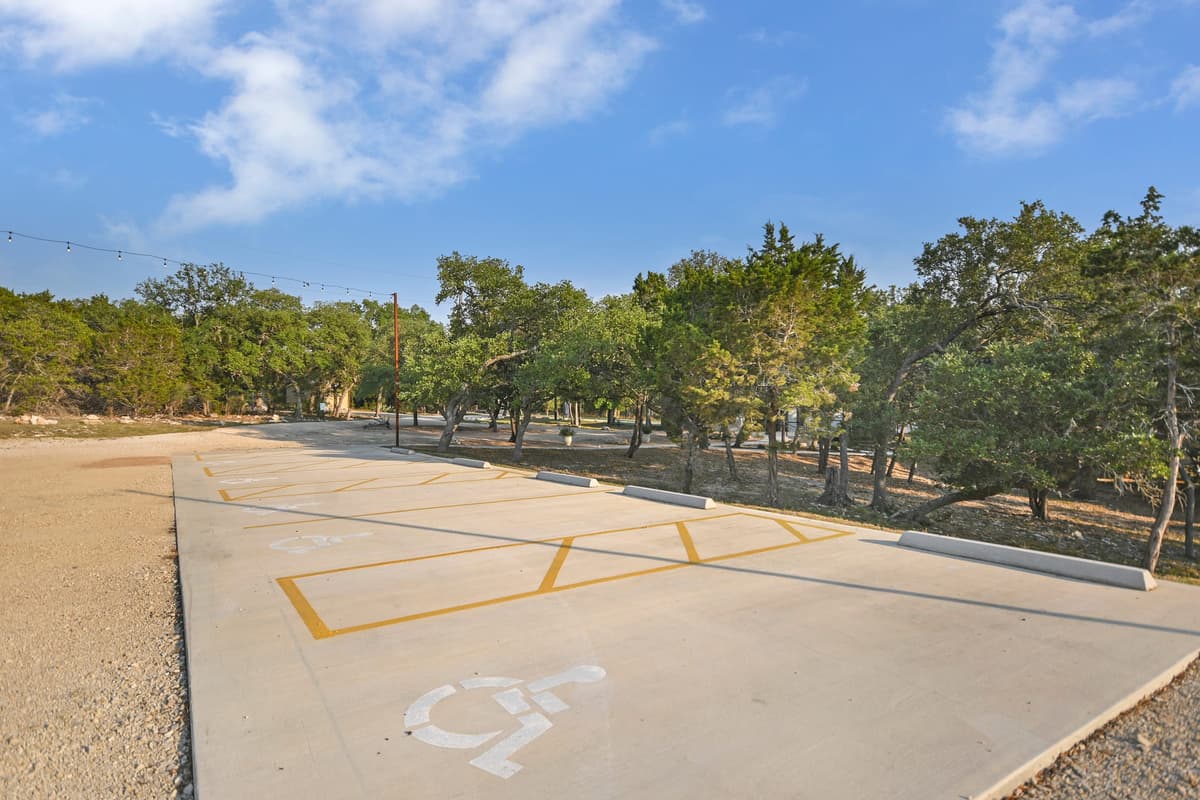
Arrival can be the most uncertain part of an unfamiliar event. Tell guests what to expect: the parking surface, the location of marked accessible spaces, the distance to the entrance, whether the route is paved, and where a driver can drop someone off.
At Prima Vista, the parking area includes marked accessible spaces. The primary ceremony and reception areas are on the same property, with paved routes connecting the main guest spaces. Because every guest's needs are different, couples should walk the route during a tour and discuss any additional assistance in advance.
An arrival note could say:
Accessible parking is marked near the venue entrance. A member of the wedding team can meet you on arrival and guide you to your seat. Please contact [name and phone number] if you would like assistance or a description of the route.
That one paragraph removes several unknowns without making assumptions about the guest.
Give one person responsibility for accessibility questions
The couple should not be the only point of contact on the wedding day. Choose a planner, coordinator, usher, or trusted friend who knows:
- The route from parking to the ceremony and reception
- The location of restrooms, exits, seating, and quieter areas
- Which guests have requested assistance
- How and when the schedule changes
- How to offer sighted-guide assistance respectfully
The assigned person should introduce themselves rather than silently taking a guest's arm. A helpful opening is, “Hi, I'm Maya, one of the ushers. Would you like guidance to your seat?” If the answer is yes, let the guest take the guide's arm and describe steps, doors, surface changes, or tight spaces before reaching them.
Keep pathways predictable
Clear circulation helps everyone, including guests using canes, wheelchairs, walkers, or service animals. During setup, protect the planned routes from parked décor, sign stands, extension cords, loose rugs, floral pieces, and chairs that project into the aisle.
Prima Vista · Wimberley, TX
See how your date, guest count, and package choices shape your estimate.
Estimate My Event
Walk the guest route after the room is fully arranged, not only when it is empty. Check it again near sunset. A route that feels obvious in daylight can become much harder to interpret when décor moves, crowds gather, or the lighting changes.
Make the ceremony easier to follow
Sound carries much of the experience for a guest who cannot clearly see the processional, expressions, or visual rituals. Ask the DJ or audio team to test speech from the guest seating area, not only beside the speakers. Reserve a seat with strong, balanced audio and an unobstructed path.
Consider adding short verbal cues for moments that might otherwise be entirely visual. An officiant can naturally identify the people entering, briefly describe a unity ritual, or explain why the room is laughing. The goal is not a running commentary. A few well-placed words can make important moments easier to share.
If you provide a printed program, offer the same content as accessible digital text before the wedding. Some guests may also prefer large print, Braille, or an audio version; ask rather than guessing.
Include the reception, not only the ceremony
Accessibility continues through dinner and dancing. A guest may benefit from:
- A brief orientation to the table, place setting, and nearby pathways
- A spoken description of buffet stations or a server who can assist
- Advance notice before lights are dimmed or guests are asked to move
- Clear introductions when someone joins a conversation
- A consistent place for personal items, mobility aids, or a service animal
- A quiet place away from loud speakers while remaining part of the celebration
Never pet, feed, photograph, or distract a service animal without the handler's permission. Keep the animal's floor space and route clear, and ask the handler whether a water area or relief break should be included in the plan.
Use useful image descriptions after the wedding
When photographs are posted online, alternative text should communicate the moment, not repeat a filename. “The couple laughs beneath oak trees after their outdoor ceremony” gives a listener meaningful context. Decorative flourishes can use empty alt text so a screen reader does not announce unnecessary details.
Captions can also help. They make names, relationships, and moments clearer for everyone, including people using assistive technology.
Questions to ask during a venue tour
Bring the guest journey into the venue conversation:
- Where are the marked accessible parking spaces and drop-off point?
- What surfaces connect parking, ceremony, cocktail hour, reception, and restrooms?
- Are there steps, slopes, thresholds, or narrow areas on the primary route?
- How is the route lit after sunset?
- Can an usher meet a guest at an agreed arrival time?
- Can seating be reserved near clear ceremony audio?
- Where can a service animal take a break?
- Who should receive accommodation requests before the event?
Prima Vista's primary ceremony, pavilion, reception, and deck or patio areas are ADA accessible, with marked accessible parking and connected guest spaces on one property. The surrounding ten-acre landscape is natural terrain, so guests who want to use portrait or scenic areas beyond the primary event spaces should discuss the route during a tour.
The most important practice: ask, listen, and confirm
“Blind-friendly” should describe a planning mindset, not a blanket promise. Invite guests to share what works for them, record the agreed plan, and confirm it with the venue and wedding team before the day arrives.
That is what good hospitality looks like. Every guest should be able to arrive with confidence, take part in the celebration, and enjoy the day on their own terms.
Venue photographs are from the Prima Vista gallery. Gallery contributors include Kirsten Holliday Photography, Rising Oak Images, Lily & Lime, Paige Wilks Photography, Look At Me Media, Reilly Clark Photography, Eight Fifteen Photography, and Maui-TV. Individual photographer attribution was not embedded in these venue files; please contact Prima Vista if you can help us match a specific image to its creator.
Planning for a guest with specific access needs? Book a private tour and tell us what you would like to walk through, hear, measure, or confirm before the wedding day.